Do Our Kids Have Any Idea What They’re Doing Here?
A few weeks ago, I was speaking with an old friend who made Aliyah many years ago. He was describing the current trauma so many Israel’s are experiencing and the challenges of growing up in a war zone. But, as he noted, despited all that, or perhaps because of it, kids in Israel believe in their purpose.
The TikTok generation of chayalim has proven themselves to be lions on the the battlefield; while their teenage siblings have mobilized to volunteer meals, support and social media campiagning.
It worries me that while all of this is going on in Israel, most of us, and our kids, are standing on the sidelines. Perhaps, there is a widening gap between the next generation of Israeli and Americans.
I know that I’m not alone in this concern. It’s a conversation that we’ve all been having for the past two years (at least).
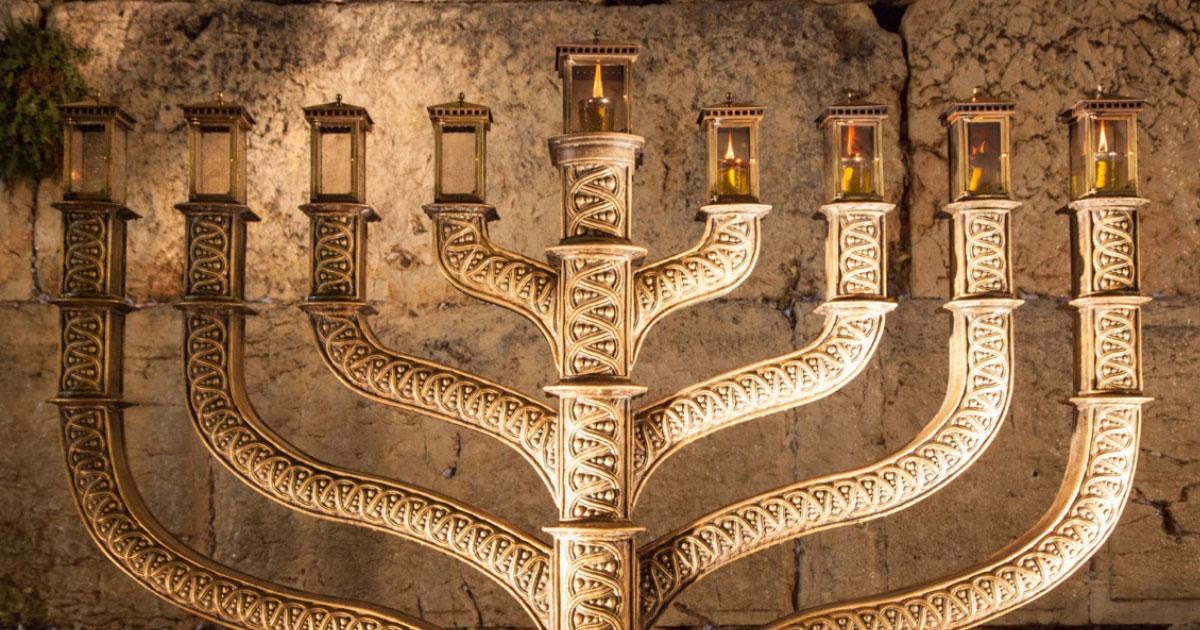
As we enter the final days of Chanukah, I’d like to reflect on this question from the standpoint of a famous and central dispute of the Gemara: What is the mitzvah of lighting Neiros Chanukah? Are we required to actively light the Ner (הדלקה עושה מצוה) or is the essence of the mitzvah in its proper placement (הנחה עושה מצוה)?
The significance of this question is not simply in the realm of Halacha. It extends to our identity as Jews in a world teetering on the brink of Redemption.
The question is as simple as it is profound: Is our obligation to ensure that we are in the right place at the right time? Or are we obliged to kindle the fire of Yiddishkeit ourselves?
There was a time, perhaps, that the right way to ensure Jewish survival and even success was making sure that we and our children were in the right place at the right time. There were generations of ensuring that the walls of the Shtetls and Ghettos kept us in and the world out. In those sacred enclaves, the world was challenging and treacherous, but clear. “They” might kill us in this world, but we will forever be safe in the world to come.
But little by little the walls have come down. And today, there are none at all. We and our children are living in a world where it is impossible to remain insular. Even if we desperately wanted and tried to, we cannot shield ourselves from the constant onslaught of western culture. Especially as our whole lives have transitioned to online-everything.
Thus the Halacha is that it is not enough to ensure the proper placement of the Neiros. We pasken הדלקה עושה מצוה – The mitzvah is to kindle the fire.
I'd like to ask your forgiveness in advance. This is not an attack on you or your family. But it seems clear to me that despite placing ourselves in wonderful communities, despite enrolling our children in stelar institutions of Torah, Mitzvos and Derech Eretz, we are not always happy with the outcome. We don't always feel as if the return on our investment meets our expectations. This is true for families everywhere; Israel and Chutz La’artetz.
I look at my students, my friends and relatives, who grew up in worlds similar to our own, and who have fallen off to one side or the other. Some have abandoned Torah and mitzvos, whilst others have fled to less nuanced, more insular communities.
I would like to humbly suggest that root of this discontent stems from attempting to live in a world in which proper placement is all it takes to live a live of mitzvos and meaning.
It's simply not enough. It is high time we learn to light the fire ourselves.
The Good News is That We're Ahead of the Curve
We have much to be thankful for. Our Rabbonim have been teaching us, leading us, paskening for us and training us to contend with worlds of tension. We are not people who shy away from modernity. We are not afraid of the halls of academia. We are students and teachers of the arts and sciences.
In the deepest way, we are the students of Yosef HaTzadik; the first Jew who lived outside of his bubble.
His greatness, of course, was that despite his lifetime of displacement, he was always on fire for Yiddishkeit. So much so, that for all generations, we asks Hashem to make our children like his.
How did he do it?
How To Survive Betrayal
The Sforno (פרק לז) explains that Yaakov had always given Yosef greater responsibilities than his brothers, recognizing that there was a certain greatness to him. Yaakov understood that Yosef alone was capable of ensuring that the legacy of Avraham and Yitzchak would eventually blossomed into a sovereign nation settled in the land. To that end, Yaakov invested in Yosef, pouring his heart, soul and time into his development. The goal of which was to raised not just another אב, whose children would continue the legacy, but a מלך, a king over the fledgling Jewish nation. Yosef shared these aspirations, and in the dreams of his youth, he saw himself as being that great leader, amongst the sheaves of wheat on earth, and the stars of the heavens above.
But when Yosef found himself being hauled out of that pit, being sold into slavery by his brothers, his world effective ends. Not only Yosef's world, Yaakov's as well. His hopes for being the father of the sovereign nation are dashed, and he retreats into himself, mourning his failure to bring the light of Hashem into this world through his children. Without Yosef, he is lost and hopeless – ארד על בני אבל שאולה.
But as the Torah turns its attention to Yosef, we ask, what will become of this leader with no-one to lead, this מלך בלא עם? What will be of this dreamer with no one to populate his dreams?
Betrayed by his own family, Yosef realizes that his brothers cannot be the future of the Jewish people. Which leaves him with only question: Can he be the next of the Avos? Avraham, Yitzchak, Yaakov and... Yosef?
Yosef is left asking himself if all of Yiddishkeit can start again from him. At least in his mind, once Yaakov leaves this world, Yosef is the last Jew on earth. The last person loyal to the tradition of Avraham, the bris with Hashem. And Yosef is just a teenager; with the weight of the future of Judaism and indeed, humanity, resting on his shoulders.
The Tipping Point
But for Yosef, all of these overwhelming complexities, enormous responsibilities, and awesome potential comes into question in one moment of one day. Will he succumb to the seduction of Potifar's wife?
This moment crystallizes all of the internal tension that he feels, the questions of his capacity to relaunch a Jewish people in exile, the questions of his fortitude as a father of the nation. All this comes to the fore in this one moment. If he can face his own challenges, he can revive and restore Yiddishkeit. And if he not.... How does Yosef succeed?
We all know the famous Medrash: ראה דמות דיוקנו של אביו – he saw the face of his father. But the Satmar Rebbe explains much further, he saw the face of his father within himself. He realized at that moment that just like Yaakov had to fight his angel of the night, so too, Yosef did as well.
In that moment, he found his fire. He was no longer a Jew. Yosef was Judaism itself. In him, was the mission and vision of bringing the Ribono Shel Olam in the world. The purpose of creation and humanity rested with him. It would be his failure or success that moved the world forward or held it back.
He found his little jar of oil. He began to live a life on fire. Yosef lives his life in Egypt charged with universal purpose. From that moment on, wherever he goes, he is holding Hashem's hand.
Do we feel that sense of mission? It's not about stocks, portfolios, SATs, promotions, or politics. It's a fire of knowing, that the Master of All World wants me here right now to do something that only I can do.
Living with this fire means that Davening is not a ritual, it's a privilege. Learning is not a chore, it's the manual for success. Chesed and tzedaka are the reasons for living.
For Yosef HaTzadik, placement is irrelevant as long as he is on fire. This is the Modern Orthodoxy that we need to live. This is the Hashkafa we need to emulate and educate. It's the deep knowledge that we are Yiddiskeit. And we can be Yiddiskeit no matter where or when we may be.
Rebbe Noson of Breslov was once asked what the difference is between a person who is on fire with Yiddiskeit, and one who isn't. Don't they both keep the same mitzvos? He answered: Of course. But it's the exactly the same as the difference between a piece of warm kugel and cold kugel.
Hashem should help us that the kugels we eat and serve should be delicious. He should help us to kindle the flame; to be warm Jews no matter where or when we are, until we are zoche to bring the fire home to Yerushalayim.