I Finally Found the Source for the Sod of Torah
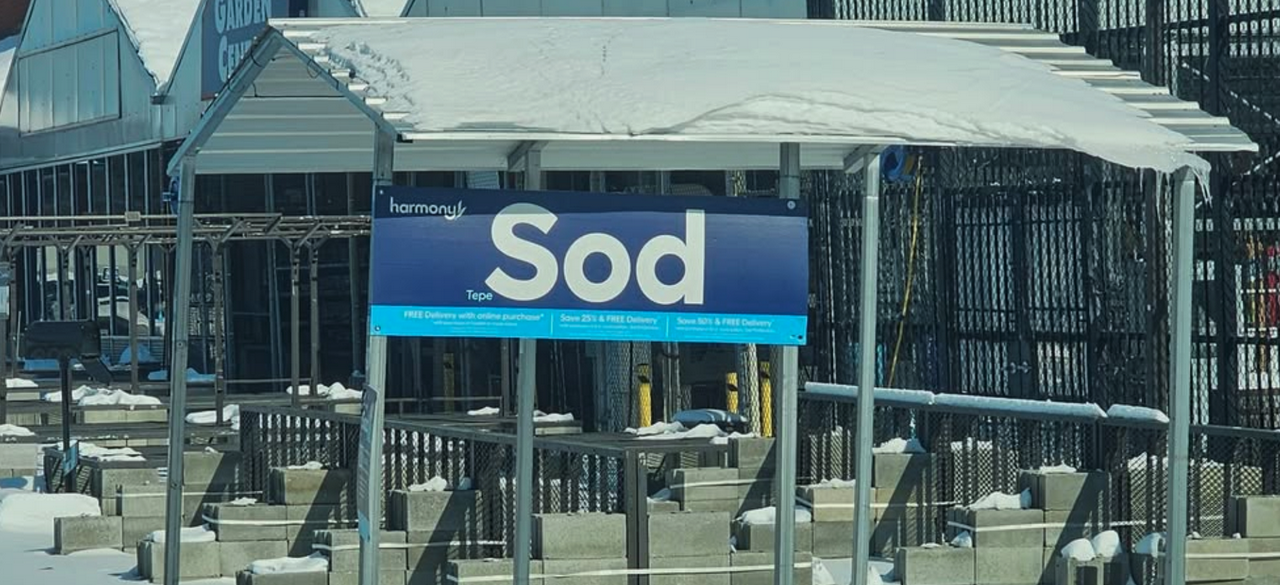
A couple of nights ago, I went for a run on a familiar route — one that I’ve run dozens of times. This time, however, there was something new to see. In the Lowes parking lot, they had updated the signage to the gardening section. A fresh sign read “Sod.”
I had a very rabbinic chuckle to myself. The Torah, in its multifaceted beauty, contains: Pshat, Remez, Drash, and Sod.
Sod is the world of secret and mystical meaning.
If only we could all pick up some Sod at Lowes.
Before you cringe too hard, I am well aware that it’s a very nerdy thought.
As I thought about it more, I realized that Hashem was showing me something that I think we’ve all struggled with: the schism between the practical work of mitzvos and the meaning behind it all.
It’s a tension that Chazal describe as central to Matan Torah.
The Gemara in Shabbos (88b) describes the moment when Moshe goes up to Shamayim to receive the Torah. The Malachei HaShares turn to Hakadosh Baruch Hu and protest: “You want to give this to flesh and blood?!”
Hashem challenges Moshe: “Answer them!”
Moshe then explains: This Torah You’re giving me — what does it say? “Anochi Hashem Elokecha asher hotzeisicha…” Did you go down to Mitzrayim? “Among the nations…” — are you living among ovdei avoda zara? Do you do melacha such that you’d need to rest on Shabbos? Do you have a father and mother to honor? Or jealousy, anger, and temptation?
None of this is relevant for angels!
The Malachim conceded, and Moshe claimed the Torah for us and for all future generations.
This entire narrative is strange. What exactly did the Malachim want? Did they not know that the mitzvos didn’t apply to them? And what would it mean if the Torah was given to us on earth? Could they not still enjoy it in Shamayim?
The Malchus Shlomo explains: the angels most certainly knew that the Torah had practical mitzvos. But they knew, far more than we do, how each and every mitzvah contains worlds upon worlds of secret profundity. The Malachim were concerned that if the Torah were brought down to earth, if it were made practical, we would strip it of its awesome mystical depths.
And that was precisely Moshe’s answer: you cannot reach the secrets of the Torah without engaging in the Maaseh HaMitzvos.
Lest we think that these Malachim are some distant mystical creatures, the Beis Yaakov teaches us that the Malachei HaShares are also psychological constructs that live in the hearts and minds of each and every person. They are part of Hashem’s creation of mankind. Which means that the debate which raged in Shamayim was taking place inside Moshe Rabbeinu. And indeed, it is happening inside each and every one of us.
There is a part of us that wants to cleave to Torah as a set of wings to ascend to heaven. We see the Torah as a mystical escape from the banal mundanities of this world. The Malachim inside us demand that we keep the Torah in its pristine, untainted condition. We don’t want to sully the beauty of Torah by bringing it into the mess and muck of daily life.
But that’s not called receiving the Torah. Hashem demands that we answer these “angels.”
And hidden in the answer is the real power of our Torah. It is not supposed to lift us to heaven. It is supposed to transform us in the here and now.
The great Sod of Torah is that it connects the lomdus of the Beis Medrash, the ecstasy of Lag Ba’Omer, and the tears of Yom Kippur to the parking lot of Lowes.
The goal of this Yom Tov is transform Matan Torah to Kabbalas HaTorah.
To receive the Torah is to receive it wherever we are — whether at the top of the mountain or at the bottom of our worst day. That’s where Hashem is talking to us. That’s where the Torah is relevant.
That’s where we most need to receive it.